

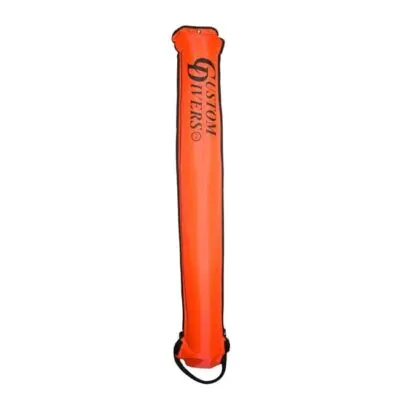
Custom Divers SEEKER Radar Detectable Delayed Surface Marker Buoy
$244.95
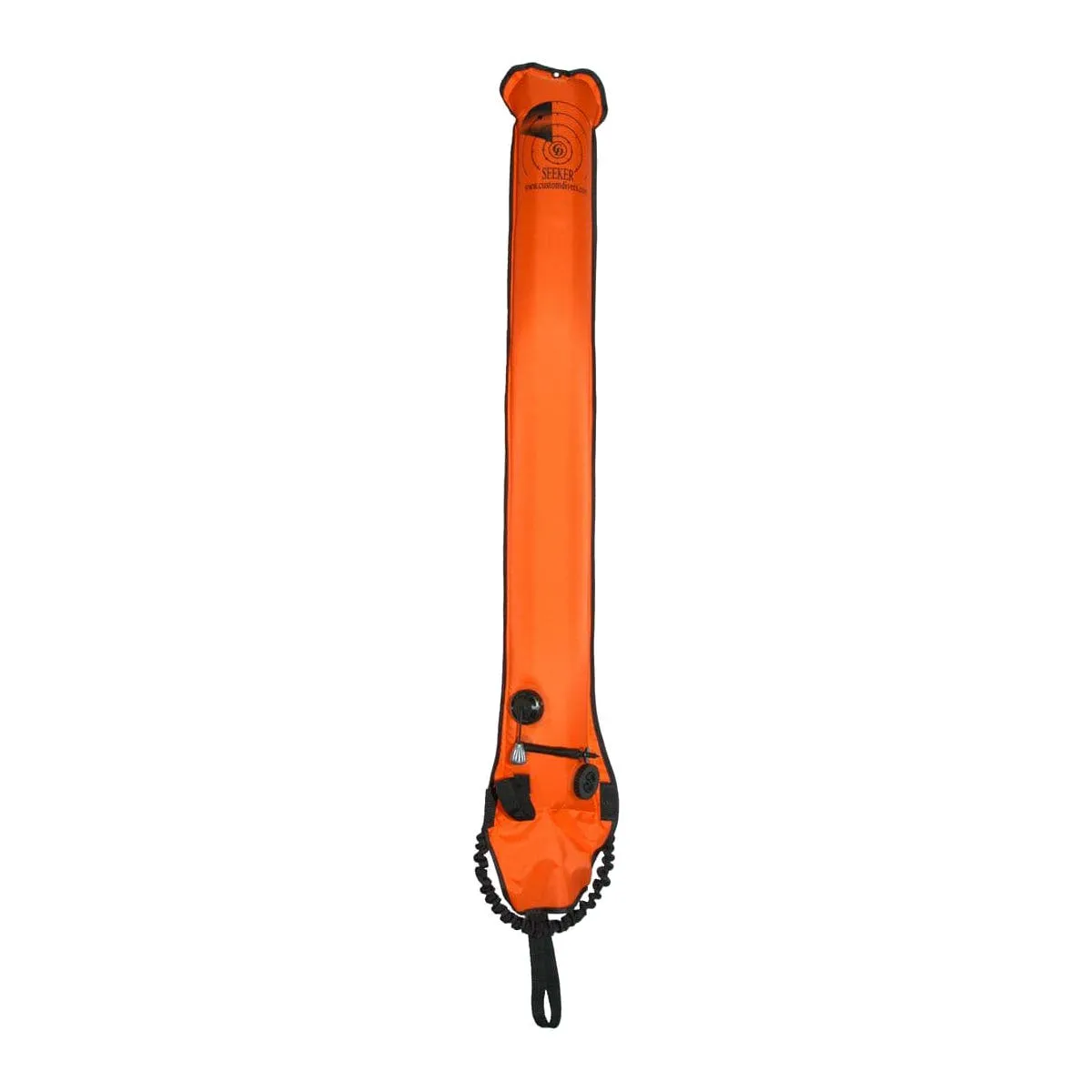
The SEEKER radar detectable inflatable surface marker buoy is a visual marker combined with a radar detectable device and is ideal for all types of adventure sports as well as divers, snorkelers, swimmers and other applications for search and rescue situations.

The SEEKER Radar detectable surface marker buoy is detectable using radar systems from boats/helicopters or any radar-seeking equipment. This system has a proven radar range of one and a half miles from boats and a two-mile range from helicopters in mild to moderate sea conditions but its signal may continue to be received intermittently in more severe circumstances. This particular system has been designed to work inside inflatable surface marker buoys. Using a conductive material shaped to receive and send back radar signals, the marker buoy reflects the radar signals enabling search and rescue services to locate the position within a distance of two miles and would be ideal to locate personnel in emergencies such as fog and nighttime rescue situations.
The SEEKER system can also be used by snorkelers and swimmers who may possibly not be seen by oncoming vessels and would also be detectable if lost at sea.
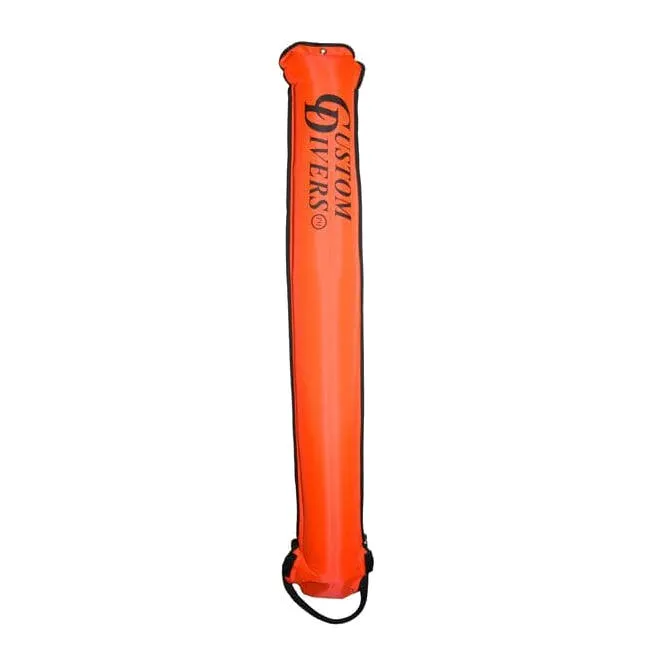
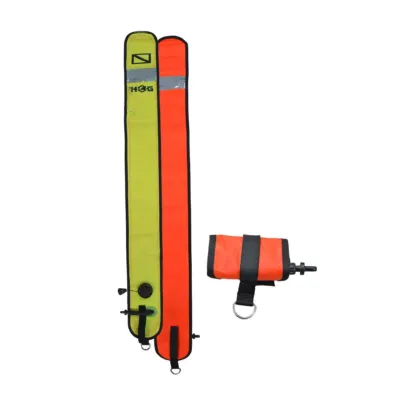
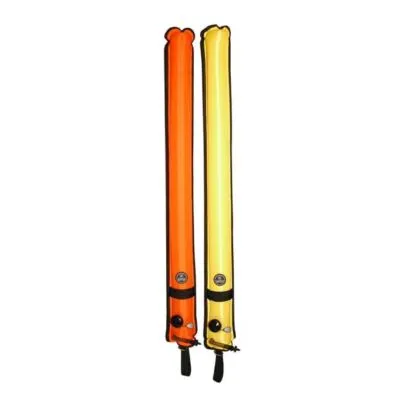
The SEEKER system is configured within an inflatable buoy which is tubular in shape, and is manufactured from high visible flow orange waterproof polyurethane coated in nylon. The SEEKER radar conductive shape is positioned inside the top part of the inflatable buoy and is welded to the inside walls of the buoy. When the SEEKER buoy is inflated the radar construction inside unfolds and is formed to operate.
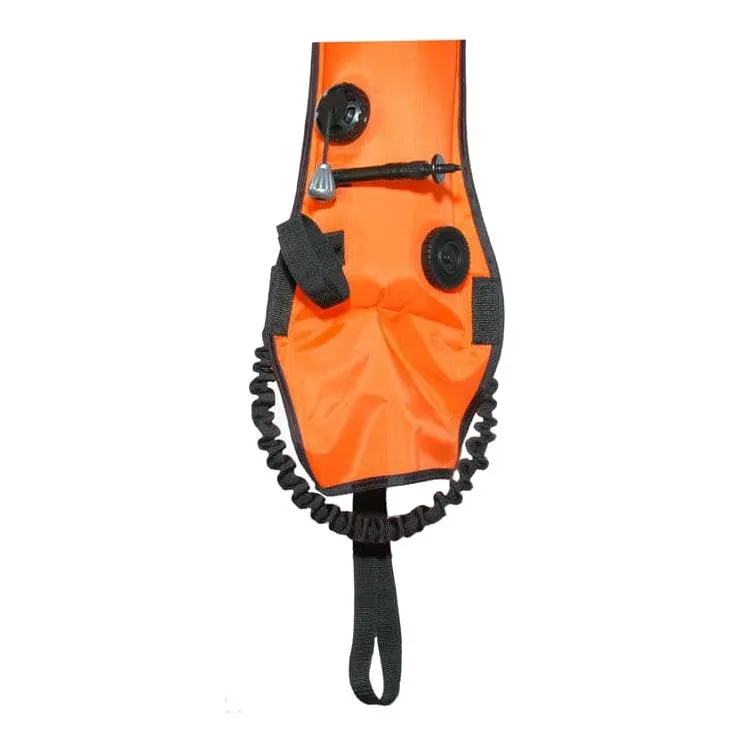
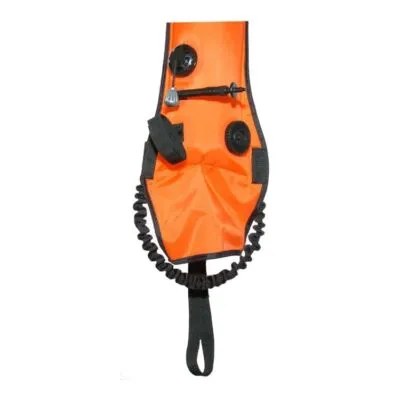
The SEEKER buoy may be inflated in four different ways:
- By blowing through the oral tube.
- The oral tube has a non-locking nipple fitting which the user can connect to hold a scuba diver’s low-pressure inflation hose fed from a first-stage regulator.
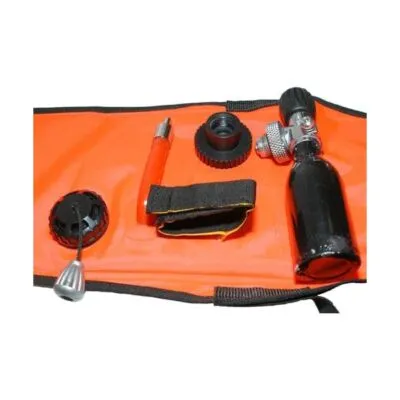
- By replacing the blanking plug system inserting a din pillar then fitting a 0.1ltr air cylinder to release the air from the cylinder into the buoy.
- By inserting a scuba diver’s second stage regulator and purging into the bottom of the SEEKER buoy.
Both the oral tube and the bottom of the SEEKER buoy have non-return valve systems to prevent the air from escaping. To avoid overinflation, an overpressure valve is fitted to the SEEKER buoy. The same overpressure valve has a pull cord which facilitates deflation of the system. When the SEEKER buoy is fully inflated it may also be used as an additional flotation device at the surface. Once the SEEKER buoy has been fully deflated it can be rolled and fastened neatly for storage.
| Weight | 1 kg |
|---|---|
| Dimensions | 20 × 15 × 15 cm |
| Colour | Orange |
Only logged in customers who have purchased this product may leave a review.

Reviews
There are no reviews yet.